What is Council's Revenue and Rating Plan 2026-2029?

Council's draft Revenue and Rating Plan 2025-2029 outlines how Council plans to set rates, fees and charges for the three years, and proposes a new differential rate for vacant commercial properties in the Frankston city centre.

Rates and charges are an important source of revenue, accounting for approximately 63 per cent of revenue received by Council that funds council services. The Victorian Government's rate capping requirements prevent Council from raising rates above the 'cap' set by the Minister for Local Government.


What changes to 'differential rates' are proposed in this Plan?

The only change being proposed in the draft Revenue and Rating Plan 2025-2029 is a new differential rate that would apply to vacant commercial properties (such as retail, hospitality and services) in the Frankston city centre.

  • Key facts about the proposal

    • 96 vacant commercial properties could be impacted as they have not been tenanted/open to the public for at least 90 days in the last 24 months.
    • If introduced, the differential rate would apply from July 2026 (after adoption of the Annual Budget 2026-2027).
    • It is proposed as one way to improve the look and feel of the city centre, but may have other impacts described below.
    • The differential rate would be removed (and general commercial rates applied) when Council is told that the vacancy is filled.
    Share your views in our survey below
  • Council is NOT proposing to change

    • There will be no change to residential rates.
    • There will be no change to existing differential rates
    • The only change being proposed to the Revenue and Rating Plan is the proposed new differential rate for vacant commercial properties.

What are the possible impacts?

The proposed differential rate would apply to vacant commercial properties (including retail, hospitality and services) in the Frankston Metropolitan Activity Centre (FMAC) area - also known as a Frankston city centre.

The differential rate is proposed to be 300% of the general rate.

We estimate that there are currently 96 vacant retail properties. The following criteria would be used to work out if the differential rate should apply, and consider any objections:

  • The property has a building (i.e. it is not derelict land or vacant land).
  • The building is designed or adapted for the sole purposes of retail or general business occupation.
  • The building has not been open to the public for retail trade for at least 90 days in the last 24 months.
  • No building/planning permit for the redevelopment or improvement of the building has been issued under the Building Act 1993 in the last 12 months.

The area that would be affected by this change is shown in yellow in the map below.

There are currently more than 50 instances of vacant land along the Nepean Highway and the Frankston Metropolitan Activity Centre.


Potential negative impacts on vacant commercial properties:

  • Average increase to each impacted vacant commercial ratepayer is $1697 per year, based on current known vacancy rates.
  • Vacancies can not necessarily be filled quickly, and it is not easy.
  • The majority of property owners are actively attempting to lease their premises. A differential rate may unfairly penalise owners who are genuinely trying to secure tenants but are constrained by factors such as building condition, configuration, or other elements that make the space currently unleasable.
  • Vacancies may be a result of anti-social behaviour, crime and other issues that are not caused by the property owners, so it could be unfair to increase their rates.
  • Recent planning and policy changes (notably FMAC Struture Plan) have only just come into effect, and many vacancies could be the result of these structural shifts. Introducing a differential rate at this stage may not allow sufficient time for affected property owners to adjust.
  • There could be additional administrative costs and resources involved in communicating with Council, understanding proposed changes and/or objecting.
  • This proposal could add to the challenges already faced by retail and hospitality sector.

Potential benefits on vacant commercial properties:

  • Council and community may better understand and support issues relating to long-term vacancies.

This proposal will not change or affect residential rates (they will not increase or decrease as a result).

Potential negative impacts on residents:

  • Car-parking from potential increased activity in the city centre
  • Construction or renovations if vacant commercial properties are leased and updated by new tenants.

Potential benefits to residents:

  • New businesses starting up in the city centre
  • Improved look and feel of the city centre.

Potential negative impacts on businesses:

  • Affected property owners could pass on the extra costs to other businesses if they own more than one property.
  • Proposal may discourage potential future commercial property investment.
  • This proposal could add to the challenges already faced by retail and hospitality sector.

Potential benefits to businesses:

  • The proposed differential rate could result in approximately $40,000 in rate revenue, which would likely lead to a small reduction for other commercial ratepayers.
  • Council is offering support to businesses to reduce vacancies, including offering grants and administrative support.
  • Property owners may provide more support to tenants to ensure their properties are not vacant.

Why is it being proposed?

The differential rate is proposed as one way to try to fill long-term vacancies in commercial properties in the Frankston city centre.

Filling these vacancies could also help to improve the look and feel of the city centre.

An audit was carried out in May 2025, which identified 96 vacant retail properties were identified. This equates to a 23% vacancy rate.

This is not unique to Frankston as vacancy challenges are widespread across metropolitan areas. For example, Chapel Street in the City of Port Phillip was recently reported to have a 20% vacancy rate.

There are many reasons for vacancies across the retail sector, including:

  • Economic pressures: Rising costs and inflation are driving up business closures and insolvencies.
  • Retail and industry shifts: The growth of online retail has reduced demand for traditional shopfronts, particularly affecting Frankston’s historically boutique retail core.
  • Reduced office demand: Work-from-home culture and hot-desking have decreased the need for traditional office space and also results in less foot traffic.
  • Localised challenges: Theft, vandalism, and antisocial behaviour continue to deter potential tenants in several precincts
  • Land banking: Some property owners maintain long-term vacancies for future capital gain/development.
  • Small business vulnerability: hard to get small businesses off the ground.
  • Parking Constraints: can affect business viability.

Council's Economic Development team are currently working closely with shop owners and have a strong Investment Attraction Program. Key areas of focus include:

  • Business grants: Small business or façade improvement grants are critical to strengthen existing traders and reduce turnover.
  • Safety and amenity improvements: Lighting, patrols and repair initiatives (e.g. window or graffiti removal) to improve public perception and leasing potential.
  • Free Concierge Service: Council runs a free Concierge service which offers support to open/expand businesses and navigate relevant permit requirements.
  • Anchor Tenants and Street Activation: Finding anchor tenants that generate high dwell time and sustained foot traffic e.g. Commonfolk, Betty’s Burgers.

Council has adopted a differential rating system to help to more fairly distribute the burden of paying rates across ratepayers. Differential rating allows:

  • Different rates to be set for certain classes of properties - at higher or lower amounts than the general rate.
  • Council to shift part of the rate burden from some groups of ratepayers to others, through different rates applied to different classes of property.

Under the Local Government Act 2020, Council is permitted to apply differential rates provided it uses Capital Improved Valuations as its base for rating. The maximum difference in rates allowed is up to four (4) times the amount of the lowest differential rate.

The draft Revenue and Rating Plan 2025-2029 sets out Council's current and proposed differential rates and the Principles Council follows when setting the rates. There are currently nine classes of differential rates in the Plan.

Council rates are a property-based tax that allow Council to raise revenue to fund essential public services and major initiatives to benefit the municipality. The important feature of rates is that they are a tax and not a fee for service.

Importantly, it is a taxation system that includes flexibility for councils to utilise different tools in its rating structure to accommodate issues of equity and to ensure fairness in rating for all ratepayers.

Rates are set each year by Council in its Annual Budget, and in accordance with its Long Term Financial Plan. The Revenue and Rating Plan also sets Principles that Council must follow when setting rates amounts.

Rates and charges are an important source of revenue, accounting for approximately 63 per cent of revenue received by Council. The collection of rates is an important factor in funding Council services.

Planning for future rate increases is therefore an essential component of the long-term financial planning process and plays a significant role in funding both additional service delivery and the increasing costs related to providing Council services.

Council is aware of the balance between rate revenue (as an important income source) and community sensitivity to rate increases. With the introduction of the State Government’s rate capping legislation, all rate increases are capped to a rate declared by the Minister for Local Government, which is announced each December for the following financial year.

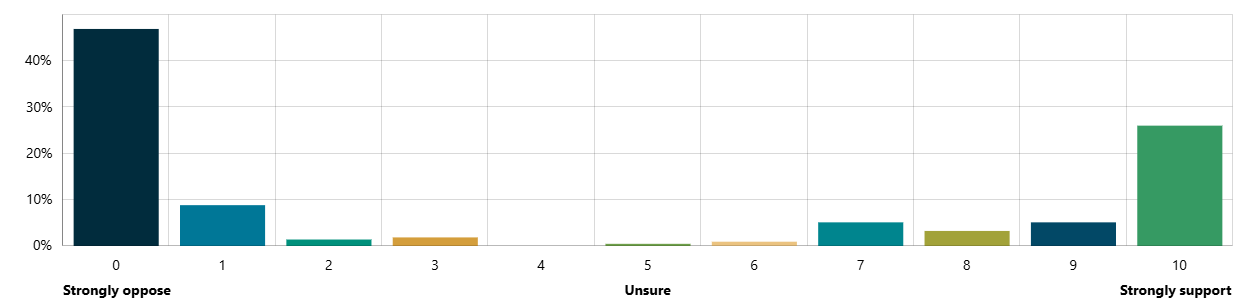
Share your feedback - do you support the proposal?

Council needs to hear whether community, businesses and property owners support the differential rate - your feedback will influence their decision

Timeline

  • Timeline item 1 - active

    Community engagement on draft Revenue and Rating Plan 2026-2029 (focused on proposed new differential rate)

    2 February - 11.59pm 4 March 2026

  • Timeline item 2 - incomplete

    Community engagement results published

    March 2026

    And shared with Councillors at a briefing.

  • Timeline item 3 - incomplete

    Final Revenue and Rating Plan 2026-2029 presented to Council for adoption

    May-June 2026

    Council will decide whether to include the proposed new differential rate in this Plan using the community engagement results.

Contact Us

Frankston City Council

PO Box 490
Frankston 3199
Tel: 1300 322 322
info@frankston.vic.gov.au

Translation and accessibility

Council can arrange a telephone interpreter for you, call us on 1300 322 322

Or you can call:
Interpreter Service: 131 450
NRS: 133 677 or 1300 555 727

Edit